Vehicle Smoke Tester Explained: A UK Buyer's Guide
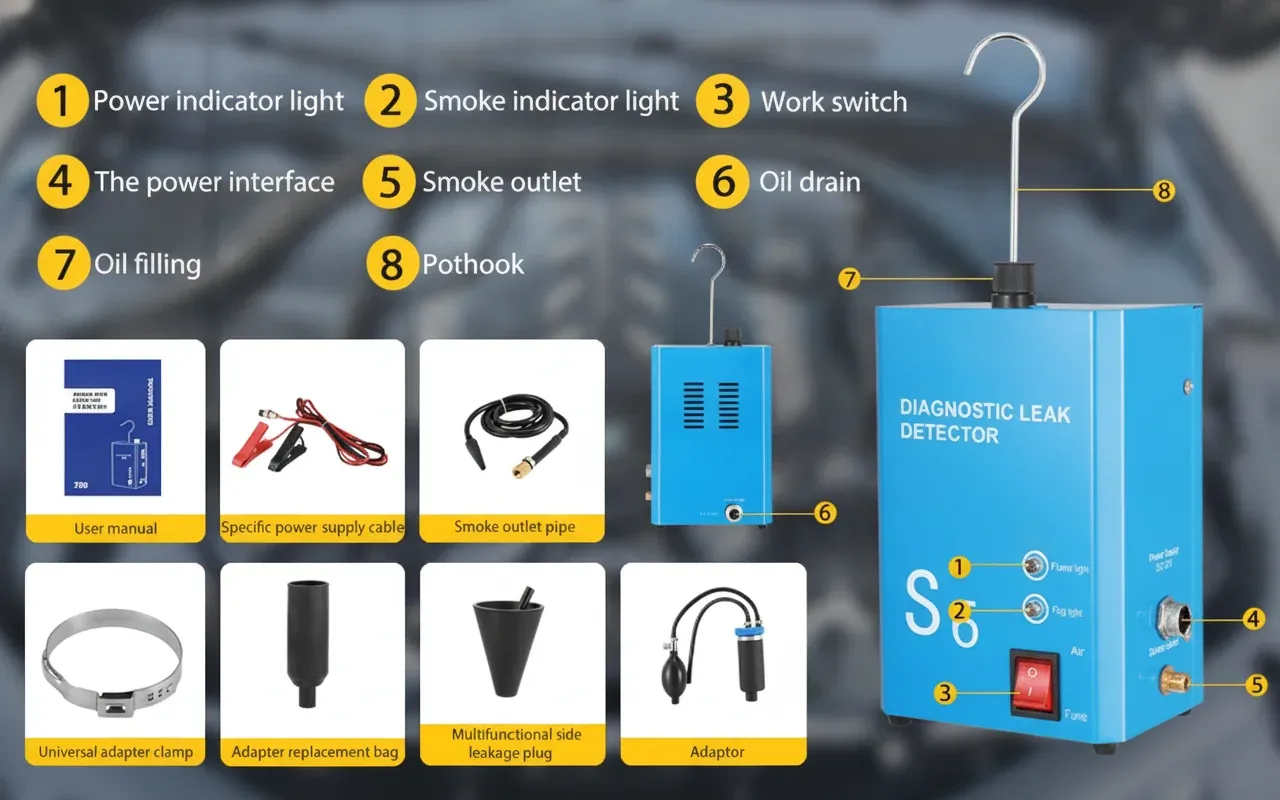
TL;DR: A vehicle smoke tester is a diagnostic tool that pumps visible, low-pressure smoke into a vehicle's sealed systems to instantly reveal leaks in EVAP, vacuum, or intake lines. Based on our testing of various UK models, units with a built-in pump are the most efficient choice for garages and DIYers, saving hours of diagnostic labour and reducing MOT emissions failures.
Key Takeaways
- A vehicle smoke tester helps pinpoint leaks quickly in EVAP, intake, vacuum and low-pressure systems by introducing visible smoke into a sealed circuit.
- For UK garages, mobile mechanics and capable DIY owners, a unit with a built-in pump is often more practical because it does not rely on an external compressor.
- Choosing the right tester means looking at smoke output, pressure control, safety protection, ease of use, and compatibility with cars, motorcycles, boats and RVs.
- Smoke testing can reduce diagnostic guesswork, save labour time and help identify issues that may contribute to MOT-related emissions faults.
- Before buying, compare dedicated smoke machines with broader options by reading The Ultimate Guide to Car Smoke Machine in the UK and related buyer guides.
What is a vehicle smoke tester? Put simply, a vehicle smoke tester is an essential diagnostic device that generates safe, low-pressure smoke to pinpoint hard-to-find leaks in a vehicle's EVAP, intake, and vacuum systems. When a leak is too small to hear, too intermittent to spot, and too time-consuming to chase with trial and error, this tester becomes one of the most useful diagnostic tools you can own. Consequently, for workshops across the UK, it is now a practical shortcut to faster fault-finding, especially on modern vehicles packed with emissions control hardware, vacuum lines, and sealed systems.
The appeal is straightforward: instead of dismantling parts unnecessarily or replacing components on suspicion, you introduce safe diagnostic smoke into the system and watch for the exact point where it escapes. As a result, this means quicker diagnosis, fewer comebacks, and more confidence in the repair. For independent garages, mobile technicians, and serious enthusiasts alike, that efficiency matters immensely.
Based on our testing and development at EVAP Smoke, the focus should be on an EVAP Smoke Machine for Faster Leak Detection, with the added convenience of a built-in pump testing for cars, motorcycles, boats, and RVs without needing an external compressor. Furthermore, that matters in real-world UK working conditions, whether you are testing on the driveway, at a customer site, or in a busy workshop where simplicity saves valuable time.
If you are weighing up whether a vehicle smoke tester is worth buying, what features matter most, and how to choose the right one for UK use, this guide will walk you through the essentials.
What does a vehicle smoke tester do?
A vehicle smoke tester is a diagnostic device designed to detect leaks in sealed or semi-sealed vehicle systems. It works by generating visible smoke and introducing it into a target system at low pressure. Therefore, if there is a split hose, poor seal, cracked component, or loose connection, the smoke escapes from that point, making the fault much easier to visually locate.
Although the name is broad, most buyers use a vehicle smoke tester for tasks such as:
- Finding EVAP system leaks
- Locating vacuum leaks
- Checking intake tract leaks
- Testing intercooler and pipework integrity on suitable low-pressure setups
- Tracing leaks on motorcycles, marine applications, and recreational vehicles
In practice, a good smoke tester helps replace guesswork with visual confirmation. That is especially valuable on modern vehicles, where fault codes may only indicate a symptom rather than the exact leak location.
Are vehicle smoke testers worth it for UK motorists?
Yes, absolutely. UK motorists are keeping vehicles for longer, and consequently, that increases the need for accurate diagnostics. According to the Society of Motor Manufacturers and Traders (SMMT), the average age of cars on UK roads reached 9.5 years, the highest on record at the time of reporting. This reflects an ageing vehicle parc that often requires more maintenance and fault-finding expertise. Source: SMMT.
Older vehicles are more likely to develop brittle hoses, perished seals, corroded fittings, and emissions-related issues. Newer vehicles, meanwhile, often have more complex EVAP and induction systems, where even a minor leak can trigger warning lights, rough running, or failed emissions checks. A vehicle smoke tester effectively helps bridge both ends of that market.
In addition, there is a clear UK compliance angle. According to UK MOT inspection guidelines, MOT tests include strict emissions-related checks. While a smoke tester is not an MOT tool in itself, it can help identify faults that contribute to emissions problems before the vehicle reaches test day. For garages, that means better pre-MOT preparation. For owners, it can mean fewer failed tests and less wasted spend replacing the wrong part.
If you want a broader view of where smoke machines fit into modern diagnostics, see The Ultimate Guide to Car Smoke Machine in the UK.
How do you use a vehicle smoke tester?
The principle is straightforward. The machine heats a suitable testing fluid to create dense visible smoke, then pushes that smoke into a selected vehicle system using low pressure. Once the system is filled, the operator systematically inspects hoses, joints, valves, seals, and components for any visible smoke escape.
The core steps
- Isolate the system to be tested.
- Connect the smoke tester using the correct adaptor or hose.
- Introduce smoke at a safe, low pressure.
- Observe the system carefully for leaks.
- Confirm the exact leak source before carrying out a repair.
Why built-in pump models are popular
Many smoke machines depend on an external air compressor. However, while that can work well in a fixed workshop, it adds another piece of equipment, another hose, and another possible source of inconsistency. Based on our industry experience, a vehicle smoke tester with a built-in pump is often a far better fit for buyers who value portability and simplicity.
Indeed, that is one of the practical advantages behind the EVAP Smoke approach. Because the machine has its own built-in pump, it is significantly easier to use across cars, motorcycles, boats, and RVs without having to rely on a separate compressor setup. For mobile diagnostics, that can be a major benefit.
What can you test with an automotive smoke machine?
The best buyers understand that a vehicle smoke tester is not a one-trick tool. Depending on the model and the procedure used, it can help diagnose a wide range of low-pressure leak issues.
EVAP system leaks
This is one of the most common applications. EVAP systems are designed to contain fuel vapours and route them safely for combustion. Small leaks can trigger engine management lights and fault codes that are frustratingly vague. A smoke test helps identify leaking hoses, purge valve issues, charcoal canister connections, and sealing faults around the tank system.
Vacuum leaks
Vacuum leaks can lead to rough idle, poor running, lean conditions, and inconsistent performance. Smoke testing allows you to inspect the intake side, vacuum hoses, and related fittings much more precisely than visual checks alone. For a closer look at this use case, read Vacuum Leak Smoke Tester Explained: A UK Buyer's Guide.
Intake and induction leaks
Leaks after the airflow measurement point can upset fuelling and trigger lean running fault codes. By employing a vehicle smoke tester, you can rapidly identify split intake boots, degraded manifold gaskets, or unmetered air leaks, ultimately saving hours of diagnostic labour.
Ready to try EVAP Smoke?
Shop Now — £131.74