Vacuum Leak Smoke Tester Explained: A UK Buyer's Guide
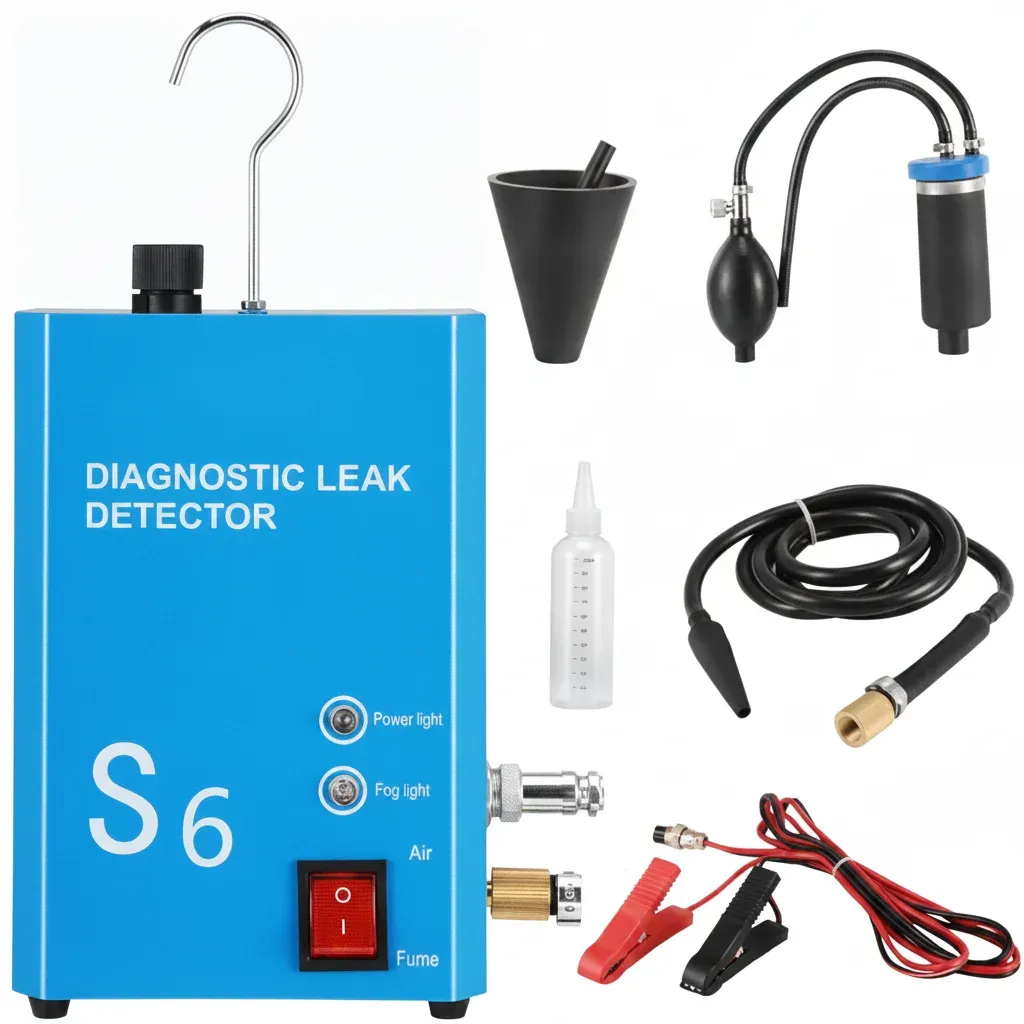
Vacuum Leak Smoke Tester Explained: A UK Buyer's Guide
TL;DR: A vacuum leak smoke tester is a diagnostic tool that pumps safe, low-pressure visible smoke into an engine's intake or EVAP system to reveal hidden air leaks. Based on our testing at EVAP Smoke, using a machine with a built-in pump allows UK mechanics to quickly pinpoint split hoses and failing gaskets without needing an external compressor, saving hours of diagnostic time and preventing MOT emissions failures.
Simply put, a vacuum leak smoke tester is the most efficient way to visually locate unmetered air entering your engine. A small vacuum leak can cause an outsized problem: rough idle, poor fuel economy, engine management lights, failed emissions checks, and hours of wasted fault-finding. Consequently, for UK drivers, workshops, and mobile mechanics, this tool offers a faster, more reliable way to trace leaks than guesswork, spray methods, or repeated parts swapping.
At EVAP Smoke, we focus on one clear outcome: faster leak detection. Based on our extensive workshop testing, our EVAP smoke machine is designed with a built-in pump, so you can test cars, motorcycles, boats, and RVs without needing an external compressor. Furthermore, that matters in real-world British workshop conditions, on driveways, and for mobile technicians who need practical equipment that works the first time.
Therefore, if you are choosing your first tester or upgrading from basic leak-finding methods, this guide explains what a vacuum leak smoke tester does, how it works, what to look for in the UK market, and how to buy the right machine for your needs.
Key Takeaways
- A vacuum leak smoke tester helps pinpoint leaks in intake, vacuum, and EVAP-related systems quickly and visually.
- Smoke testing is often faster and more precise than listening for hissing or using sprays around hoses and gaskets.
- A built-in pump is especially useful in the UK for mobile work and smaller garages that do not want to rely on an external compressor.
- Look for stable pressure output, clear flow control, thermal protection, and compatibility with cars, motorcycles, boats, and RVs.
- Ultimately, the right tester can reduce diagnostic time, avoid unnecessary parts replacement, and support more consistent repair quality.
What is a vacuum leak smoke tester?
A vacuum leak smoke tester is a diagnostic tool that introduces safe, visible smoke into a sealed system at low pressure. Where there is a crack, split hose, loose clamp, perished gasket, or poorly seated fitting, the smoke escapes and shows the exact source of the leak.
In practical terms, this makes it far easier to identify faults in intake pipework, vacuum lines, inlet manifold seals, and related components. Rather than replacing parts on suspicion alone, you can actually see where the system is losing integrity.
The principle is straightforward but highly effective. Modern engines depend on accurate airflow and pressure readings. Even a small air leak downstream of key sensors can upset fuelling calculations and drivability. As a result, a proper smoke test allows you to isolate those leaks quickly.
Why is smoke testing important for cars?
Many faults associated with vacuum leaks overlap with other symptoms, such as unstable idle speed, hesitation under load, lean mixture fault codes, or intermittent warning lights. That overlap can make diagnosis slow if you rely only on scan tools or visual checks. However, a smoke test adds direct, undeniable physical evidence.
This is particularly relevant in the UK vehicle parc, where ageing petrol cars remain common on the road. According to the Society of Motor Manufacturers and Traders (SMMT), the average age of cars on UK roads has reached a record high of around nine years. Furthermore, according to UK MOT testing guidelines, unmetered air leaks frequently lead to MOT emissions failures. Older vehicles are significantly more likely to develop brittle rubber hoses, hardened seals, and minor leaks that are difficult to detect by eye alone.
Source: Society of Motor Manufacturers and Traders (SMMT), UK car parc reporting on average vehicle age.
How does a vacuum leak smoke tester work?
The machine heats a suitable testing fluid to produce dense diagnostic smoke. That smoke is then pushed into the target system at a controlled low pressure. Once the system is filled, any escape point becomes instantly visible as wisps or plumes of smoke from the leak location.
How do you find a vacuum leak with a smoke tester?
Based on our testing and daily workshop practices, the basic process is straightforward:
- Select the system you want to test and ensure the engine is cool enough to work on safely.
- Seal the relevant openings, such as the throttle body or air box, where required.
- Connect the tester using the supplied hose or conical adaptor.
- Introduce smoke at low presnto the closed system.
- Watch carefully around hoses, joints, manifolds, valves, and fittings for escaping smoke.
- Repair the leak and repeat the test if needed to confirm sealing integrity.
Why are built-in pump designs better?
Some testers require an external air compressor; however, others use an integrated pump. For many UK buyers, built-in pump models are far more convenient because they reduce setup time and remove dependency on separate workshop air equipment.
This approach fits EVAP Smoke’s core design philosophy: make leak detection quicker and easier. An integrated pump means one less machine to move around the garage and one less barrier when working off-site on motorcycles, marine applications, or leisure vehicles. For mobile mechanics in particular, that simplicity can be decisive.
What problems can a smoke tester diagnose?
A high-quality vacuum leak smoke tester is focused on one job: finding leaks efficiently. In day-to-day use across UK workshops and home garages alike, it is commonly used for diagnosing issues affecting engine performance and system sealing.
Common faults a smoke tester can reveal
- Split or perished vacuum hoses
- Leaking inlet manifold gaskets
- Poorly seated hose clamps or couplings
- Cracks in intake ducting
- Leaks around throttle body connections
- Faults in EVAP-related lines where appropriate
Visible smoke escapes indicate a clear loss of sealing integrity. A visual result saves time because it narrows down the diagnosis immediately. Instead of testing multiple theories at once, you can go straight to the actual failure point. Ultimately, that helps professionals improve labour efficiency and helps private owners avoid buying parts they do not need.
What are the symptoms of a vacuum leak?
If you are experiencing drivability issues, there are several telltale signs that justify using a smoke machine. According to our expert automotive technicians, watch out for the following symptoms:
- Rough idle or stalling at low revs
- Poor throttle response or hesitation
- Lean mixture fault codes (e.g., P0171 or P0174)
- Whistling or hissing noises from engine bay pipework
- Unexplained drop in fuel economy
- Difficult cold starts linked to unmetered air entering the engine
Ready to try EVAP Smoke?
Shop Now — £131.74