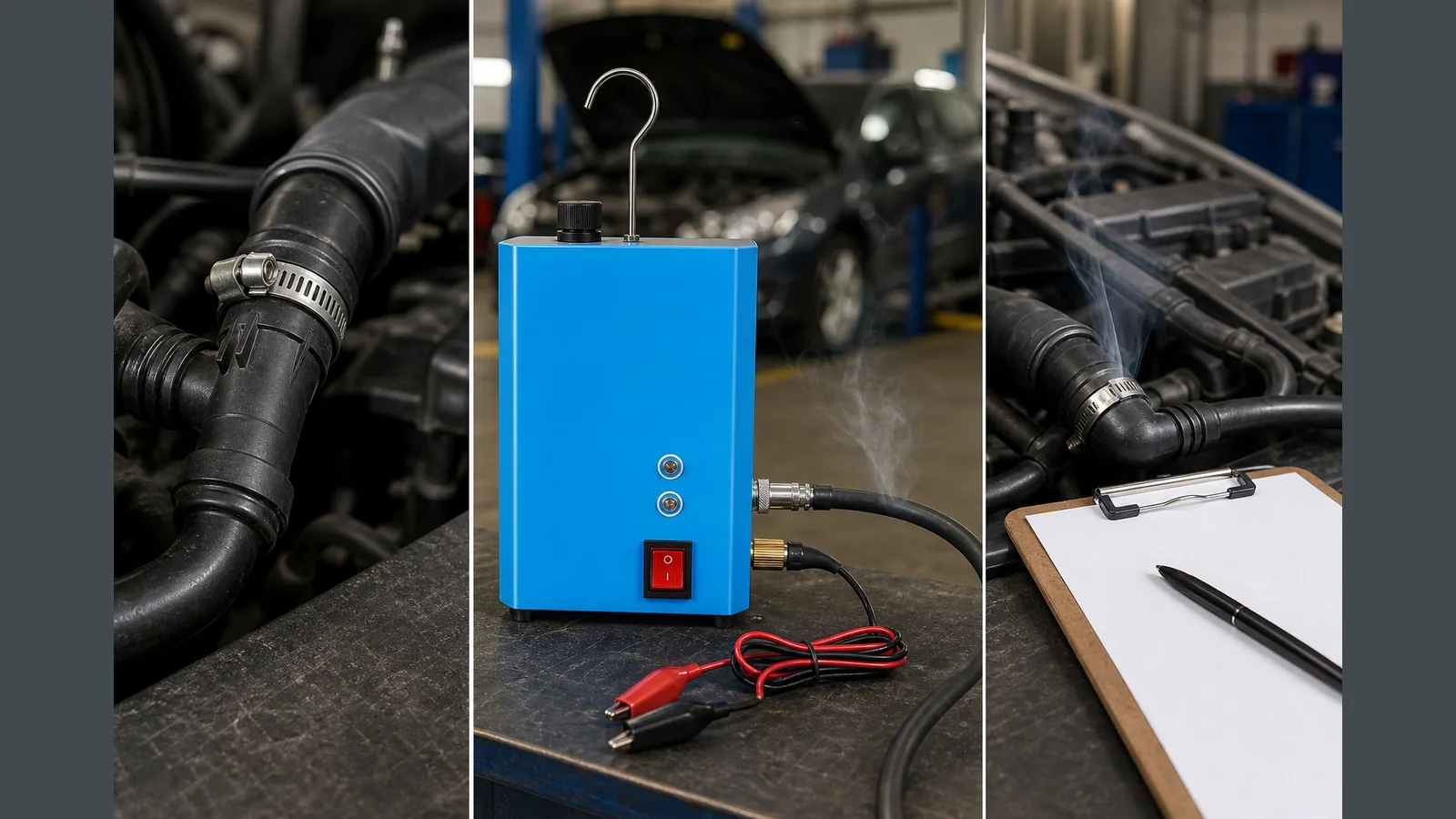
Smoke Test After EVAP Repair: A Safe Confirmation Checklist
Short answer: yes, a repeat smoke test can be useful after an EVAP repair, but it is only one confirmation step. Refit the system, test the repaired area, check the wider sealed section, and then use the vehicle's own EVAP monitor or service procedure to confirm the fault is resolved.
The aim is not to keep adding smoke until a problem disappears. The aim is to prove that the repaired hose, cap, valve seal or canister connection no longer leaks under the correct low-pressure test conditions, without ignoring scan-tool data or safety limits.
Post-repair diagnostic ladder
| Stage | What to check | What it means |
|---|---|---|
| 1. Reassembly | Every hose, clamp, cap, connector and access point is back in place. | A missing cap or loose hose can create a new false leak. |
| 2. Local smoke check | The repaired area shows no visible smoke escape. | The local repair looks sealed, but the whole EVAP system may still need checking. |
| 3. Wider boundary check | Nearby lines, the fuel cap area, vent path and canister connections are inspected as appropriate. | A second leak can remain after the obvious fault is fixed. |
| 4. Vehicle confirmation | Scan-tool data, functional tests or the EVAP readiness monitor are reviewed according to the vehicle procedure. | No visible smoke is useful evidence, not a universal pass certificate. |
Why a repair can still need confirmation
EVAP faults can involve more than one component. A purge valve can affect leak-test behaviour, a vent valve may need to seal during testing, and the fuel tank pressure sensor or vehicle monitor may be part of the diagnostic decision. That is why a repeat smoke check should sit alongside scan-tool evidence, not replace it.
Safety boundaries before retesting
- Let hot parts cool and do not work near open flames, heaters, sparks or smoking materials.
- Do not test a system with visible fuel leakage, damaged fuel lines or an uncertain connection point.
- Use low-pressure automotive smoke equipment and the correct smoke fluid for the machine.
- If you cannot seal the test boundary without forcing parts or bypassing the vehicle procedure, stop and get technician help.
Using a smoke machine responsibly
The EVAP Smoke UK product page describes a 12V smoke leak detector with a built-in air pump and low pressure output for vehicle leak diagnosis. It can help make a leak visible after a repair, but the final decision still depends on the vehicle procedure, scan-tool results and whether the work area is safe.
View the EVAP smoke machine details if you need a visual leak-checking tool, and use it only where the service information and safety conditions are clear.