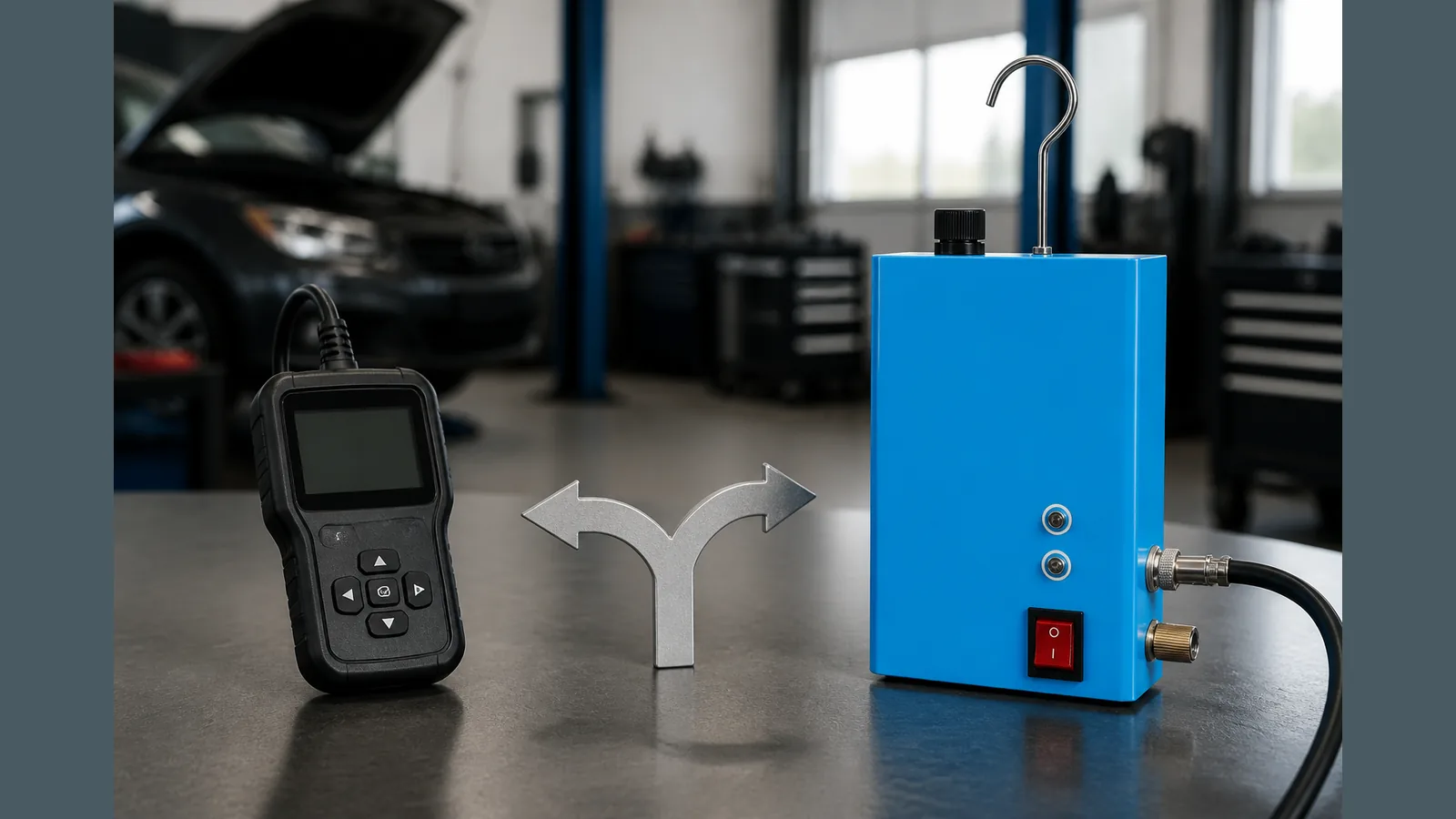
EVAP Smoke Test vs Scan Tool: Which Comes First and Why?
Short answer: start with the scan tool when you need the vehicle's stored codes, freeze-frame clues or commanded EVAP tests. Use a smoke test when the next question is physical: where is vapour escaping from a sealed hose, cap, valve area or canister connection?
The two tools do not replace each other. A scan tool helps you understand what the vehicle has detected and, on supported models, may command purge or vent functions. A smoke machine helps you see a leak path. The safer order is the one in the vehicle service information, with the work area ventilated and ignition sources controlled.
A cautious diagnostic order
| Question | Tool that usually answers it | What not to assume |
|---|---|---|
| Which EVAP code or monitor failed? | Scan tool | A code alone does not prove the leaking part. |
| Can the vent or purge valve be commanded for this model? | Scan tool, when supported | Not every tool or vehicle exposes the same functional tests. |
| Where is smoke escaping? | Low-pressure automotive smoke tester | No visible smoke is not the same as a completed readiness monitor. |
| Has the repair actually solved the monitor fault? | Vehicle-specific retest or drive-cycle evidence | Do not clear codes and call the job finished without confirmation. |
When the scan tool should come first
Use the scan tool first if the job begins with a check-engine light, an EVAP DTC, a fuel-tank pressure reading or a commanded component test. Modern EVAP systems can include purge valves, vent valves, pressure sensors and leak-detection devices, so the code context matters before smoke is introduced.
When smoke testing earns its place
Smoke testing is useful once you have a sealed section to check and a safe way to introduce smoke. It can reveal split vacuum hoses, loose caps, cracked fittings or leaks around EVAP pipework that are hard to find by sight alone. Keep the pressure low, follow the vehicle procedure and stop if fuel leakage, damage or an unsafe work area is present.
Safety boundaries for DIY checks
- Work outside or in a well-ventilated workshop, away from sparks, cigarettes, heaters and other ignition sources.
- Use an automotive smoke tester for sealed vehicle systems; do not improvise with workshop compressed air on an EVAP system.
- Do not smoke-test a hot, damaged or actively leaking fuel system.
- If the service information is unclear, hand the job to a qualified technician rather than guessing the connection point.
Where the EVAP Smoke UK kit fits
The current EVAP Smoke UK product page describes a 12V automotive smoke leak detector with a built-in air pump, low working pressure and a hose/accessory kit for leak detection work. That makes it a practical visual leak-finding tool after the scan-tool evidence has narrowed the area to inspect.
View the EVAP smoke machine details if you need a compact smoke tester for vehicle leak checks, then confirm that your vehicle procedure and access point match the job before testing.