EVAP Smoke Test Safety Checklist: A UK Workshop Pre-Start Routine
An evap smoke test safety checklist starts with one rule: read the vehicle-specific service information and the smoke tester’s operating instructions before you connect any hose, lead or adapter. That sequence keeps fuel-system, battery and workspace risks visible, avoids improvised pressure or connection settings, and matches how service procedures expect smoke equipment to be used by qualified technicians.
Answer first: use vehicle-specific service information and the tester instructions before connecting
Motor vehicle repair work requires risks to health and safety to be identified and minimised, including fuel and battery-related hazards. Before an EVAP or pipework smoke check, confirm the diagnostic path, sealing points and any stated precautions in the manufacturer’s information for that vehicle, then follow the tester instructions for power, media and connection method.
Service guidance for evaporative-system leak diagnosis may allow smoke equipment, but only when its operating instructions are followed and the work is treated as a technician procedure—not a free-form workshop shortcut. Use confirmed details a universal fitting sequence or pressure figure; the vehicle procedure and the equipment instructions control what you connect and how you run the test.
- Confirm the fault path and any EVAP, intake, vacuum or pipe-seal steps named in the vehicle information.
- Power and operate the tester only as its instructions describe (vehicle-side DC 12V where that is the supported supply method).
- Use adapters and hoses that match the stated test point; do not improvise from another kit’s fittings.
Pre-test vehicle, fuel-system and workspace checks
Complete a short pre-start pass so fuel vapour, battery and workspace hazards are controlled before smoke is introduced.
- Identify fuel-system and battery hazards for the job, and plan how you will keep them minimised during the test.
- Confirm the workspace is clear of ignition sources appropriate to fuel-vapour work, and that extinguishing provision and spill response are available as your shop rules require.
- Verify the vehicle is stable, parking brake applied, and you know which systems must stay isolated for the procedure you are following.
- Check that the smoke leak detector is intended for automotive pipework leak finding on the vehicle systems you plan to test (for example EVAP, intake, vacuum or sealing checks named in the service information)—not for air-conditioning refrigerant micro-leak claims.
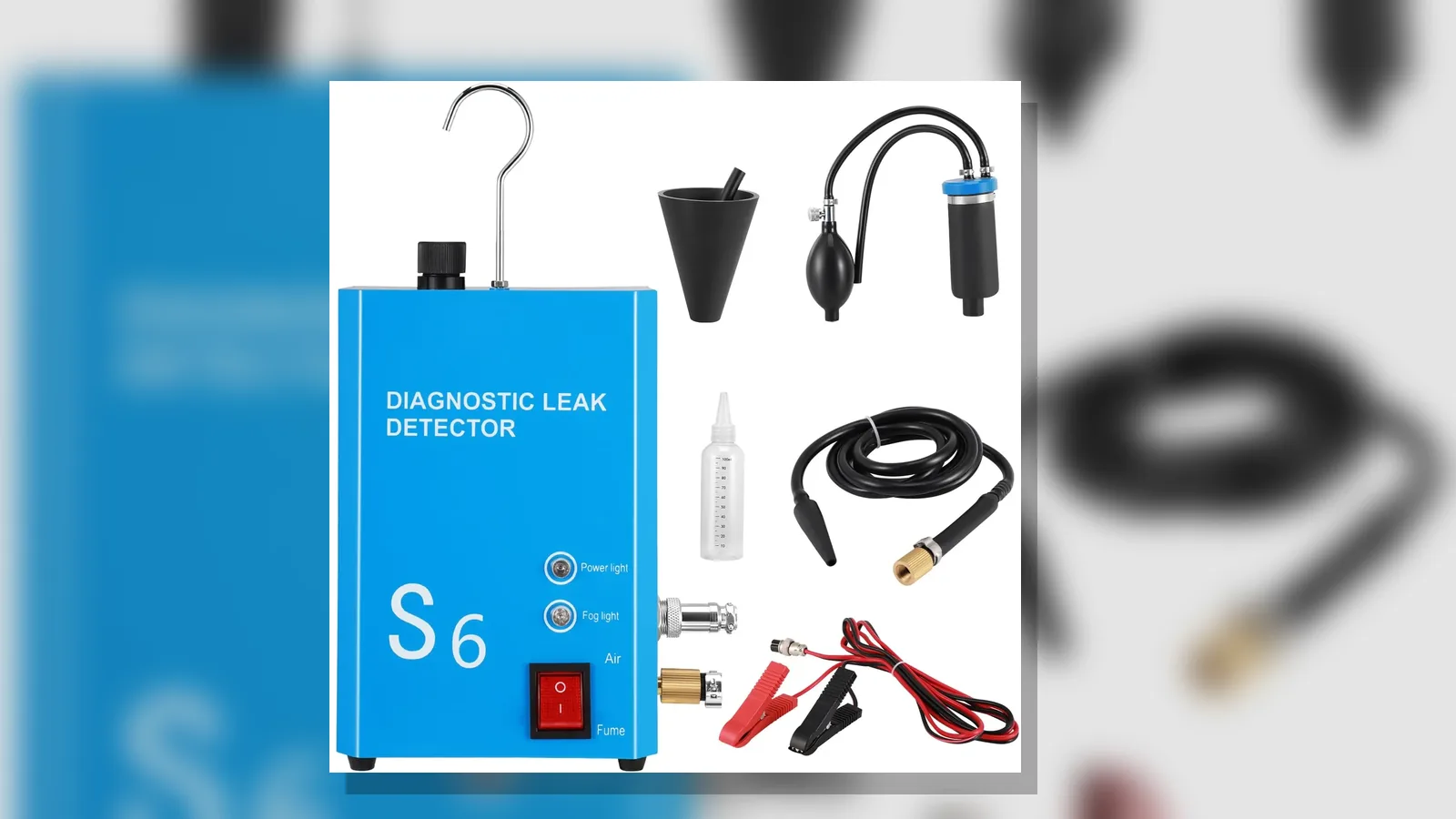
- Have the current product details and kit instructions to hand so assortment contents and leads match what you will use.
Connection, lead and hose inspection checklist
Inspect hardware before smoke generation so leaks at the tester side do not mask or mimic vehicle leaks.
- Inspect power leads for damage, secure vehicle-side DC 12V connection, and correct polarity as the tester instructions require.
- Check hoses for cracks, soft spots, loose clamps and contaminated fittings.
- Confirm adapters seat on the named test port only; do not force mismatched cones or caps.
- Keep spare fittings from other assortments out of the job if they are not listed for this kit.
- Do not set or chase a “standard” workshop pressure value; use only the method and limits given in the vehicle and equipment instructions.
Ventilation and engine-off boundaries
HSE advises effective ventilation for motor vehicle repair and warns that vehicle exhaust can quickly reach harmful concentrations indoors. Keep engine-off boundaries clear unless the vehicle procedure explicitly requires a running-engine step, and ventilate the bay so smoke media and any exhaust are not trapped around the operator.
- Prefer engine-off smoke introduction when that matches the service information.
- If a running-engine step is specified, ensure exhaust extraction or outdoor positioning meets your ventilation plan before starting.
- Do not treat a leak smoke machine as an approved MOT diesel smoke meter, and do not imply that a smoke leak check guarantees an MOT pass.
Stop conditions and when to refer to a qualified technician
Stop the test and isolate equipment if you see uncontrolled fuel wetting, damaged wiring near the connection point, unexpected pressure behaviour, or any condition the instructions say must not continue. Refer the job when the procedure is outside your competence, when manufacturer steps require specialist tooling you do not have, or when evaporative-system diagnosis is specified as technician-only work.
Smoke equipment may be permitted in some service bulletins, but only with its operating instructions followed and within a qualified-technician procedure—not as a substitute for vehicle-specific diagnosis.
Post-test isolation, clean-up and record sheet
After the check, isolate power, relieve or disconnect test connections as instructed, and restore caps, hoses and connectors to their service positions before road use or further diagnosis.
- Disconnect DC 12V supply and stow leads so terminals cannot short.
- Clear residual smoke media from the bay with continued ventilation as needed.
- Wipe fittings, reseal open ports, and return adapters to the kit.
- Record vehicle identity, procedure followed, connections used, observations, and any referral—without inventing pressure or performance figures you did not measure under a controlled method.
For kit identity and current offer details for an automotive smoke leak detector intended for vehicle pipework, see the SAMFD S6 automotive smoke leak detector kit details.
FAQ
What belongs on an EVAP smoke test safety checklist?
Vehicle service information first, then tester instructions, fuel and battery hazard controls, lead and hose inspection, ventilation and engine-off boundaries, stop or referral rules, and a short post-test isolation and record step.
Can I use one connection method for every vehicle?
No. There is no universal connection sequence or pressure value; follow the vehicle procedure and the equipment operating instructions for that job.
Is a smoke leak detector suitable for air-conditioning refrigerant micro-leaks?
Do not assume or claim that use. Treat the tool as an automotive smoke leak detector for vehicle pipework scenarios named in service information (such as EVAP, intake, vacuum or sealing checks), not as refrigerant micro-leak equipment.
Does a workshop smoke test replace MOT diesel smoke metering?
No. A leak smoke machine is not an approved MOT diesel smoke meter, and using it does not guarantee an MOT pass.